


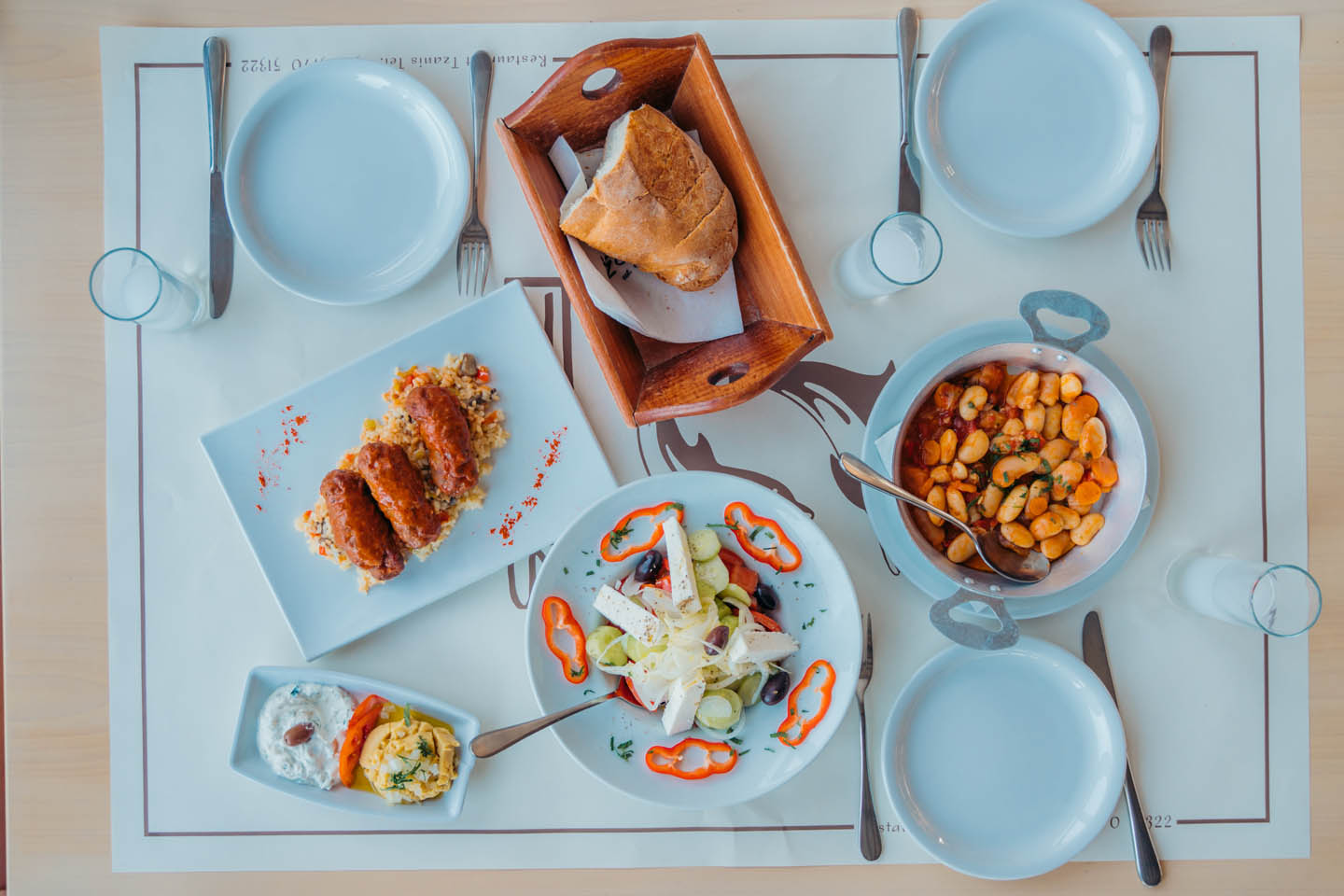
Travel becomes richer when visitors taste the place they are exploring, and Halkidiki is a destination where food plays a central role in the overall experience. The region’s cuisine is shaped by the sea, olive groves, village traditions, seasonal products and the relaxed rhythm of Greek hospitality. A visitor may come for the beaches, but very often they remember the meals just as strongly. A dinner by the water, a village tavern, a plate of seafood, a spoon of local honey or the taste of good olive oil can stay in memory long after the holiday ends. Food helps travellers feel the destination with all their senses, not only through images and views.
Each part of Halkidiki offers a different food atmosphere. Kassandra is ideal for visitors who want variety, beach dining, modern options and a lively summer mood. Sithonia is perfect for those who enjoy meals in scenic surroundings, close to harbours, small bays and quieter coastal villages. Central Halkidiki brings a more traditional and inland character, with local recipes, mountain villages and products connected with the land. East Halkidiki offers calmer seaside dining and a more understated rhythm, especially in areas where visitors want peace, local colour and proximity to the sea. By moving between these areas, travellers can understand how food reflects the identity of each place.
Meals Create Travel Memories
Food creates strong travel memories because it is connected with emotion and atmosphere. A meal is rarely experienced alone; it usually includes people, conversation, views, smells, sounds and the mood of the moment. In Halkidiki, this is especially true during summer, when dining often takes place outdoors or near the sea. The combination of warm evenings, fresh ingredients and relaxed service creates a feeling that many visitors associate with holidays in Greece. Even a simple meal can become unforgettable when it happens in the right place, at the right time, with the right company. This is why food should be seen as part of the journey, not just a practical need.
Food also helps visitors understand local hospitality. The way meals are shared, the way dishes are placed in the middle of the table, the way local products appear in simple recipes and the way taverns become meeting points all reveal something about the culture of the region. Halkidiki’s tourism identity is not only based on natural beauty, but also on welcoming people and everyday experiences. A visitor who eats in a local tavern or tastes regional products often comes closer to the real character of the destination. This kind of experience cannot be replaced by sightseeing alone. It is direct, human and memorable.
Taste as Local Culture
Food in Halkidiki is a form of local culture because it connects land, sea and tradition. Olive oil reflects the agricultural landscape, seafood reflects the coastline, honey reflects the natural environment and traditional recipes reflect family and community life. Visitors who understand this connection experience the region more deeply. They begin to see food not as something separate from travel, but as one of the clearest expressions of place. This is important for tourism because travellers increasingly look for authentic and meaningful experiences. In Halkidiki, food offers exactly that. It allows visitors to taste the region, support local businesses and create memories that are simple, honest and strongly connected with the destination.