


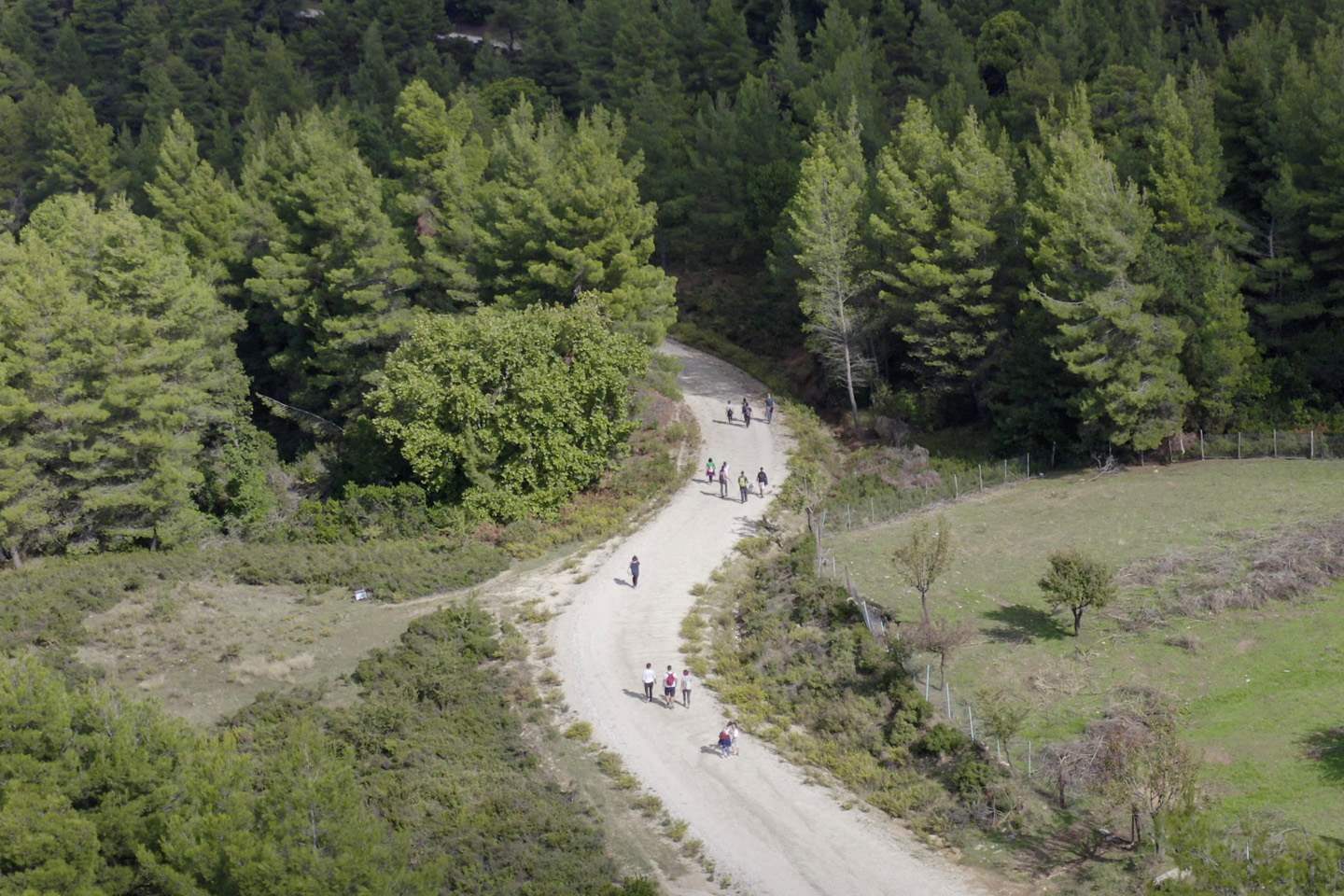
Walking changes the way travellers understand a destination. When visitors move slowly, they begin to notice sounds, colours, textures, views and everyday scenes that are easily missed at higher speed. In Halkidiki, this matters because the region is full of contrasts and small transitions. A route may move from a beach to a pine forest, from a village square to a viewpoint, from a coastal path to a quiet chapel or from a tourist area to a more local neighbourhood. These details create the real feeling of the place. Walking gives visitors time to experience them properly and helps them connect with Halkidiki beyond the surface of beaches and summer images.
This type of exploration is especially useful in a region as diverse as Halkidiki. Kassandra, Sithonia, Central Halkidiki and East Halkidiki each have different walking identities. Kassandra can offer easy seaside walks, resort paths and accessible routes close to beaches and villages. Sithonia is more connected with natural scenery, coastal landscapes and quiet routes where the sea and pine trees often meet. Central Halkidiki offers inland charm, traditional settlements and greener surroundings, while East Halkidiki can combine coastal calm with cultural and spiritual references connected to the wider Mount Athos area. Walking allows visitors to understand these differences more clearly because they experience the landscape at human pace.
Small Details Matter
One of the strongest benefits of walking is that it turns ordinary details into travel memories. A stone-paved village street, a small church, an old doorway, a shaded path, a sea-view bench or the smell of pine trees can become part of the visitor’s experience. These details may not appear in a standard travel guide, but they often shape how people remember a place. In Halkidiki, walking through a traditional village or along a quiet coastal route can feel more authentic than simply arriving at a famous beach. It gives travellers the feeling that they are participating in the destination rather than just consuming it.
Walking also gives visitors more freedom to stop. They can pause for photographs, sit at a viewpoint, enter a small shop, talk with locals, enjoy a coffee or change direction when something interesting appears. This flexibility is important for travellers who want a more personal holiday. It also supports more responsible tourism, because visitors engage with smaller places and local businesses instead of concentrating only on the busiest coastal areas. In villages such as Arnaia, Parthenonas or other traditional settlements, walking helps travellers understand the human side of Halkidiki. They see not only landscapes, but also community, architecture and local rhythm.
Travel with More Attention
Walking in Halkidiki is not only a physical activity. It is a way of paying attention. It helps visitors understand how the sea, mountains, forests, villages and cultural landmarks are connected. A simple walk can become part of a wider travel experience that includes food, photography, nature, history and relaxation. This makes walking suitable for visitors who want depth without difficulty. They do not need to be experienced hikers to enjoy this activity. They only need time, comfortable shoes and the willingness to explore beyond the obvious. In Halkidiki, walking reveals more because the region has more to offer than a quick view can show. It encourages travellers to slow down, look closer and discover the destination through real moments.